
Your Home May Be Your Biggest Retirement Asset: Michael Standard on Using Home Equity Without Losing Your Home
Most retirees spend decades paying off a house. Then they reach retirement with more money locked in that house than they hold in the bank, and they never touch it. Part of the reason is fear. Many people believe that using their home equity means handing over the house. In this episode of Safe Money Radio, host Brett Blake sits down with Michael Standard, a former stockbroker who now helps older homeowners understand the home equity conversion mortgage, a government-insured program overseen by the Federal Housing Administration. Here is what he covered, in plain language, for anyone sitting on a paid-off home and wondering what to do with it.

About This Blog
Most retirees spend decades paying off a house. Then they reach retirement with more money locked in that house than they hold in the bank, and they never touch it. Part of the reason is fear. Many people believe that using their home equity means handing over the house. In this episode of Safe Money Radio, host Brett Blake sits down with Michael Standard, a former stockbroker who now helps older homeowners understand the home equity conversion mortgage, a government-insured program overseen by the Federal Housing Administration. Here is what he covered, in plain language, for anyone sitting on a paid-off home and wondering what to do with it.
What a Home Equity Conversion Mortgage Is
The program has a formal name and an acronym that gets used a lot: HECM, the home equity conversion mortgage. Michael describes it simply. It lets a homeowner use a portion of their equity, not all of it, without making a monthly payment. Money can come out as a lump sum, as monthly income, or as a line of credit the homeowner draws on over time. The Federal Housing Administration insures the loan and places a lien on the home for the amount used. This is the modern, government-insured version of what people used to call a reverse mortgage. Michael is quick to point out it works differently from the older product that gave the category a bad name.
The Biggest Misconception
The fear Michael hears most often is that the government will take the house. He says that is the wrong worry. With this program, the home passes to the heir named on the estate, usually the children. After the homeowner passes, the family has about a year to sell the home or refinance and keep it. Any equity that was not spent stays with the heirs. In Michael's words, the government does not want the house. The program is built to let people use what they already own while keeping the home in the family.
No Required Monthly Payment
The feature that surprises people most is the absence of a required monthly payment. A homeowner can make payments if they choose. Nothing requires it. The balance is settled when the home is sold, typically after the owner passes. Michael explains that the loan is non-recourse, which means the borrower and the heirs cannot owe more than the home is worth when it sells. If the balance ever grows past the home's value, the insurance built into the program covers the difference. He notes that the older reverse mortgages did not work this way, and that families sometimes faced a shortfall. This structure is designed to prevent that.
What Happens to the Home
Michael walks through the whole process. There is an application and a credit check. Then the homeowner completes a required counseling session with a Federal Housing Administration counselor, a call that confirms the person understands the loan and is not being pushed into it. Only after that does the appraisal happen. The program carries a one-time insurance fee and standard closing costs, and those costs come out of the loan rather than out of the homeowner's pocket. The fees are the reason Michael tells people this only makes sense if they plan to stay in the home for a while.
When It Is Not the Right Move
One of the more useful parts of the conversation is Michael naming the times he turns people away. If a child who depends on the home lives there, he says the program creates a problem later, because the home has to be sold or refinanced after the owner passes. And if a homeowner does not expect to stay in the house for more than a year, the upfront fees are not worth it. He says he will decline to do the loan in both cases. For a show built on education over sales, that kind of straight talk is the point.
The Real Goal: Aging in Place
Underneath the mechanics, Michael keeps returning to one idea. The goal is to help people stay in their own homes as long as they safely can. He describes clients who used their equity to make a house easier to live in, adding grab bars and a walk-in shower so a spouse could remain at home. He describes others who used the money to travel with grandchildren or to build something for the next generation. His framing is consistent. This is your equity. You earned it. Put it to work for yourself and your family. A program like this may or may not fit any one person. It depends entirely on their age, their goals, and their situation, and it calls for a licensed professional to walk through.
Want to take the next step?Run your own numbers with the free WIYN calculator at brettblake.annuity.com, which takes about three minutes. Ready to talk it through? Book a Retirement Clarity Session with Brett. Not a sales call. Not a slide deck. Your numbers, not ours.
Worry Less. Live Longer.
About the host
Brett A. Blake hosts Safe Money Radio and is the CEO of Annuity.com. He is 58, a Harvard MBA who will tell you the degree taught him almost nothing about retirement income. Before Annuity.com, he helped scale a business to nearly $1 billion in annual sales. He lives in Gilbert, Arizona with his wife Erin, and asks the questions every retiree would ask if they had access to the right rooms.
About the guest
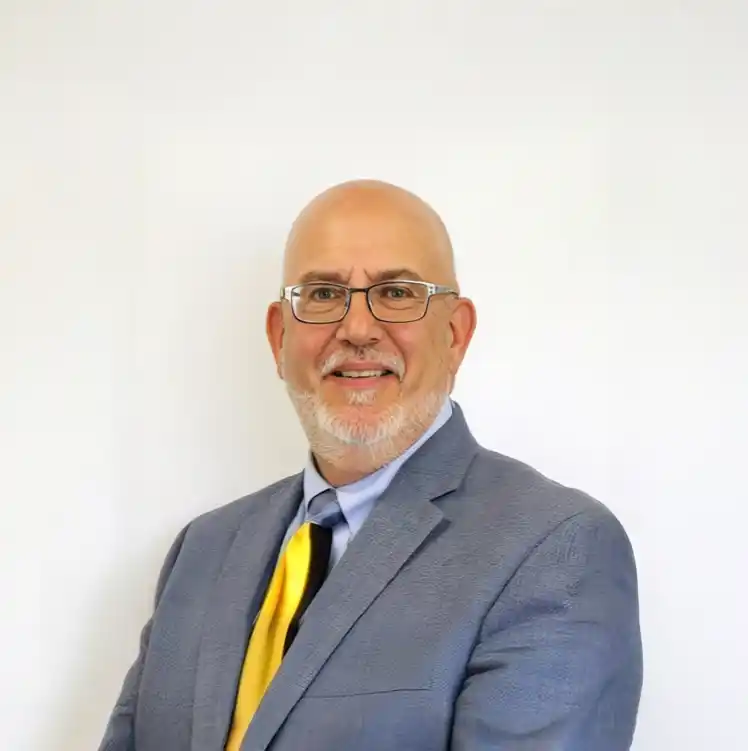
Michael Standard is a former stockbroker who now focuses on helping older homeowners use their home equity in retirement. He is the president and founder of Hero Loans, LLC, and he specializes in the home equity conversion mortgage (HECM), the government-insured program overseen by the Federal Housing Administration. He is licensed in Oregon, Texas, Washington, and Florida.
Follow or Subscribe to Safe Money Radio Podcast on your favorite platforms
Website: safemoneyradio.com | YouTube: @SafeMoneyRadioPodcast | Facebook: Safe Money Radio | Instagram: @safemoneyradiopodcast | TikTok: @safemoneyradiopod | Twitter (X): @safemoney_radio
Follow Brett A. Blake
LinkedIn: @brettblake | Retirement tools: brettblake.annuity.com | Email: brett.blake@annuity.com
Follow Michael Standard (Founder, Hero Loans, LLC)
LinkedIn: @mstandard | Website: heroloansllc.com
#RetirementIncome #HomeEquity #HECM #AgingInPlace #RetirementPlanning #FinancialSecurity #SafeMoneyRadio
DISCLAIMER:
Safe Money Radio is for educational purposes only and does not constitute investment, tax, or legal advice. Products discussed may not be appropriate for everyone. Always consult a licensed professional before making financial decisions. Product availability varies by state. The home equity conversion mortgage is a loan program overseen by the Federal Housing Administration and is not offered by Annuity.com, Inc. Our Agents are licensed to sell insurance products, including annuity products that guarantee retirement income based on the financial strength of the insurance company providing the product. Annuities may not be suitable for everyone. Guarantees are not government-backed or provided by Annuity.com, Inc. Annuity.com, Inc. is a licensed insurance agency. National Producer Number (NPN): 21086345. Licensed in all states where required by law. Doing business in Florida and California as "Annuity.com Insurance Marketing," CA License No. 6013124. In New York, licensed as Annuity.com Insurance Solutions, License No. LA-1860109.
Related Blog
Duis mi velit, auctor vitae leo a, luctus congue dolor. Nullam at velit quis tortor malesuada ultrices vitae vitae lacus. Curabitur tortor purus, tempor in dignissim eget, convallis in lorem.



Comments