
The Volatility Tax Nobody Explains to Retirees
Todd Tresidder was in a college investments class in the early 1980s, staring at price charts, and something jumped out at him that his professor swore was impossible. You do not have to know anything about a stock to profit from it. You could do it with math.

About This Blog
Todd Tresidder was in a college investments class in the early 1980s, staring at price charts, and something jumped out at him that his professor swore was impossible. You do not have to know anything about a stock to profit from it. You could do it with math.
His professor waved him off. So did his father. Two decades later, after 12 years running a hedge fund, retiring at 35, and testing every algorithmic approach he could find, he had the answer they missed. Very few things beat buy-and-hold. The ones that did all had one thing in common. It was not what most retirees think.
Smart investing runs on defense.
You spent a career learning to save. Almost nobody teaches what the second half looks like. That gap is why so many retirees worry every month sitting on a healthy balance.
On this week's episode of Safe Money Radio, host Brett A. Blake sits down with Todd Tresidder, founder of Financial Mentor and a former hedge fund manager who retired financially independent at 35.
The Question the 4% Rule Answers Without Explaining
The 4% rule is one of the most-quoted figures in retirement planning. William Bengen introduced it in a 1994 paper in the Journal of Financial Planning. The idea, in plain language, is that you can spend 4 percent of your retirement portfolio in year one and adjust that amount for inflation every year after, and history says your money will last 30 years. Bengen has since raised his own number, and the details in his more recent work are worth reading.
Set aside the exact figure for a moment. Here is the question almost nobody asks about it.
If your portfolio has historically earned 8 to 10 percent a year, why can you only safely spend 4?
That is Todd Tresidder's question. It is a good one. You would think a portfolio that earns 8 could pay you 6 or 7 without going anywhere, let alone dip into principal. Instead, conventional advice hands you back roughly half of what your money is producing, and calls the difference discipline.
That gap has a name. It is a tax.
The Volatility Tax
Todd calls it the volatility tax. It is not a metaphor. It shows up in the math.
Try this. Suppose your portfolio gains 50 percent one year and loses 50 percent the next. What is your average return? Zero. What is your actual account balance? You started at $100. After the gain, you were at $150. After the loss, you were at $75. You lost 25 percent, even though your average return says nothing happened.
That gap between average return and compound return is the volatility tax. The more your portfolio moves around, the bigger the tax. Bonds and stocks move around a lot. Treasury bills barely move at all. That is why a T-bill retiree can safely spend close to what the bills yield. A stock retiree cannot.
The volatility tax is real, established, and quietly ignored by the industry that sells you volatility.
Sequence of Returns Is When the Tax Comes Due
If the volatility tax were only about average math, retirees could shrug it off. It is not. It is worse than that.
The order of your returns matters more than the average, especially in the years right around retirement. You can average 10 percent a year for 20 years, pull out 5 percent a year, and still go broke. It happens when the wrong years land first.
The retiree who lived through the 2000 tech crash learned this the hard way. The market eventually recovered. A 4% rule retiree from March 2000 did not, at least not on the timeline the math promised. While the S&P clawed its way back, that retiree kept spending. The portfolio was fighting a recovery and a withdrawal at the same time. That math turns hostile fast.
Sequence of returns is why the years just before and just after your retirement date are the most fragile you will ever have.
Why Defense Wins
Todd's sports analogy is the fastest way to feel this. In any professional sport, the championship team is almost never the top offensive team in the league. It is the team that plays defense as well as it plays offense. Because when you play great defense, you control the ball. When your portfolio plays great defense, you control the compounding.
Retirement math is asymmetric. A 10 percent loss needs an 11 percent gain to break even. A 25 percent loss needs 33 percent. A 50 percent loss needs 100. Once you slip past the 25 to 33 percent range, the math turns against you and does not turn back.
Todd calls that range the death zone for a retirement portfolio. Most retirees never look at that number. They look at their most recent statement, their average return, and their advisor's reassurance. None of those tell you where your death zone is.
The Part You Cannot Hand Off
The single hardest line Todd draws in the conversation with Brett Blake is the one about delegation.
Most retirees hire a plumber and forget about the pipes. It is a reasonable move. When you hire an advisor, the instinct says the same thing. Hand it off. Stop worrying.
Todd is direct. You can delegate the authority. You can never delegate the responsibility. Retirement is not a one-time job. It is a decision you make every week for the rest of your life, quietly, in a hundred small ways. What to spend. When to rebalance. Which news to ignore. Which parts of the plan to trust.
The further you sit from those decisions, he says, the worse they get. Not because advisors are dishonest. Because you are the one who lives with the outcome. Distance from responsibility makes for weaker choices.
That is uncomfortable to hear. It is also true.
What This Means If You Are 58 to 68
You do not need to become a math professor. You do need to know what the game is.
Five steps if you are near retirement:
Ask what the volatility tax on your portfolio actually is. Your advisor should be able to show you the gap between arithmetic return and compound return over the years you own the portfolio. If they cannot, that is information too.
Ask how your plan handles a bad sequence, not just an average return. Monte Carlo language is fine, but the real question is what happens to your monthly income if the first three years of retirement go badly.
Know your death-zone number. Somewhere between 25 and 33 percent portfolio drawdown, the math stops recovering on a normal timeline. Write down the dollar figure. Look at it every year.
Separate the money that funds your life from the money that grows for later. The portion of your retirement that has to produce a check next Tuesday is not the portion that should be volatile.
Stay in the seat. Read your own statements. Ask your own questions. Delegate the work, not the decision.
FAQ
Is the 4% rule broken? Not exactly. It was calibrated to survive the worst return sequences on record. It is a floor, not a target. The math behind it is the same math charging you the volatility tax. If you never smooth the volatility, the 4% ceiling is what is left.
Isn't buy-and-hold the safest strategy? It is a valid one. Buy-and-hold means you accept market risk at all times to get a market return. In accumulation years, that trade tends to work. In retirement, when you are withdrawing while the portfolio recovers, it quietly costs you more than the industry admits.
Can guaranteed income solve the volatility tax? Guaranteed income (the frame of this show) removes the volatility tax on the piece of the portfolio it covers. Products may not be suitable for everyone and are subject to state availability and individual suitability. Retirement income and portfolio growth are two different jobs. The same math does not run both.
Do I have to manage my own money to do this right? No. But you do have to stay in the seat. You can delegate the trades to an advisor, an algorithm, or an insurance product. The decision is still yours.
Where To Start
Want to take the next step? Run your own numbers with the free WIYN calculator at brettblake.annuity.com, which takes about three minutes. Ready to talk it through? Book a Retirement Clarity Session with Brett. Not a sales call. Not a slide deck. Your numbers, not ours.
You spent 40 years learning how to fill the bucket. It is worth an afternoon learning how to turn on the tap without running it dry.
Worry Less. Live Longer.
About the host
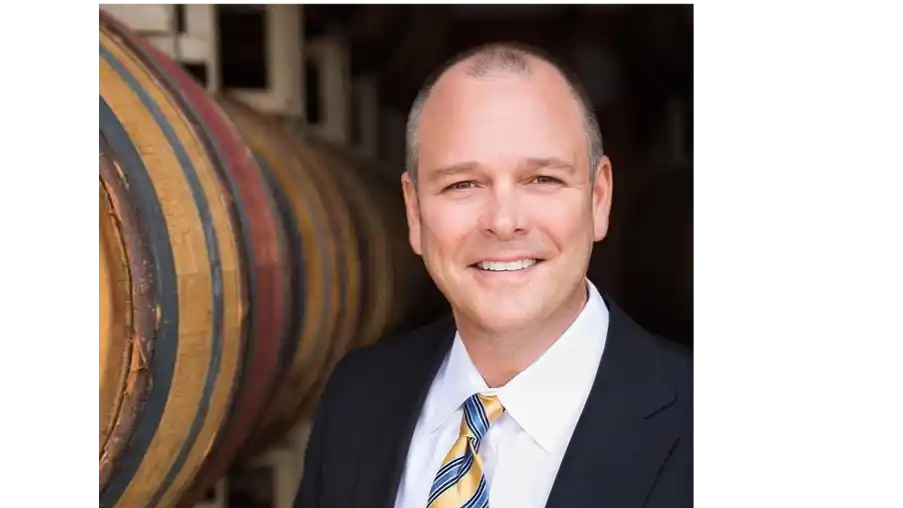
Brett A. Blake hosts Safe Money Radio and is the CEO of Annuity.com. He is 58, a Harvard MBA who will tell you the degree taught him almost nothing about retirement income. Before Annuity.com, he helped scale a business to nearly $1 billion in annual sales. He lives in Gilbert, Arizona with his wife Erin, and asks the questions every retiree would ask if they had access to the right rooms.
About the guest
Todd Tresidder is the founder of Financial Mentor and a former hedge fund manager who retired financially independent at 35. He hosts the Financial Mentor Podcast and has authored multiple personal-finance books, including How Much Money Do I Need to Retire?. His work has appeared in the Wall Street Journal, Investor's Business Daily, and Yahoo Finance. He lives in Reno, Nevada.
Follow or Subscribe to Safe Money Radio Podcast on your favorite platforms
Website: safemoneyradio.com | YouTube: @SafeMoneyRadioPodcast | Facebook: Safe Money Radio | Instagram: @safemoneyradiopodcast | TikTok: @safemoneyradiopod | Twitter (X): @safemoney_radio
Follow Brett A. Blake
LinkedIn: @brettblake | Retirement tools: brettblake.annuity.com | Email: brett.blake@annuity.com
Follow Todd Tresidder (Founder, Financial Mentor)
LinkedIn: @toddtresidder | Website: financialmentor.com
#RetirementIncome #4PercentRule #SafeWithdrawalRate #MarketRisk #VolatilityTax #SequenceOfReturns #RetirementPlanning #SafeMoneyRadio
DISCLAIMER:
Safe Money Radio is for educational purposes only and does not constitute investment, tax, or legal advice. Products discussed may not be appropriate for everyone. Always consult a licensed professional before making financial decisions. Product availability varies by state. Guest opinions are their own and past performance does not guarantee future results. Educational products discussed, such as the Expectancy Wealth Planning course, are not offered by Annuity.com, Inc. Our Agents are licensed to sell insurance products, including annuity products that guarantee retirement income based on the financial strength of the insurance company providing the product. Annuities may not be suitable for everyone. Guarantees are not government-backed or provided by Annuity.com, Inc. Annuity.com, Inc. is a licensed insurance agency. National Producer Number (NPN): 21086345. Licensed in all states where required by law. Doing business in Florida and California as "Annuity.com Insurance Marketing," CA License No. 6013124. In New York, licensed as Annuity.com Insurance Solutions, License No. LA-1860109.
Related Blog
Duis mi velit, auctor vitae leo a, luctus congue dolor. Nullam at velit quis tortor malesuada ultrices vitae vitae lacus. Curabitur tortor purus, tempor in dignissim eget, convallis in lorem.
Comments